Planning Your Restoration
Planning Your Restoration olcadminSuccessful restorations result from careful planning and preparation. Even the simplest projects can benefit from a little forethought. More complex projects can take many months and by taking notes and photographs before you start and as you go along you can help a great deal in the long run. This section provides basic advice about planning and preparing your restoration project.
Before You Start
Before You Start olcadminHere is the machine we are going to restore. This 14" Ransomes Patent Chain Automaton was made around 1905. When the machine was found it was rusty and very little of the original paintwork remained. The front wooden rollers were almost rotted away, the chain was missing and the bottom blade was badly corroded. For these reasons the decision was made to restore the mower.
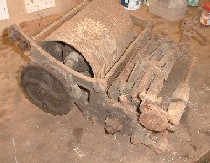
A bit of thinking and planning before you start will make the restoration easier.
TO RESTORE OR NOT
This is one of the big questions to ask yourself before you contemplate a restoration project. The decision is completely up to you but here are a few pointers.
WHY RESTORE?
Many collectors like to restore their mowers to original condition. This is fun and rewarding because you are helping to save something from the past for future generations.
TAKE SOME PHOTOS
Take some photographs of the mower before you start. These will be a useful reference when you reassemble any bits that have been taken apart. In particular, take images of intricate assemblies. Digital cameras simplify this but any basic camera will do.
MAKE SOME NOTES
Make notes of any unusual features that may not show up very easily on your images. For example, some nuts will have washers and others will not. Making a note of these before you start is better than trying to guess days, weeks or even months later.
CHECK FOR COLOURS
Getting the final colours right will make all the difference to a successful restoration and you need to decide what they are before you start. Queries about colours are often received by the club and we have compiled some basic guidelines.
Make a note of which parts are painted which colour.
CHOOSE SOME TOOLS
You do not need any specialist equipment to restore an old mower but a few basic tools will be very useful.
BE PATIENT
There is a temptation to get cracking before you have thought it all through. If something is taking a little longer than you expected or a few nuts and bolts are seized, take a break. When you come back everything will seem a little easier.
Now you have decided to restore the mower, taken some images, noted any special details and checked the colours you are ready to start.
Restore Or Not?
Restore Or Not? olcadminTO RESTORE OR NOT?
Deciding to restore or not is one of the big questions to ask yourself before you contemplate a restoration project. The decision is completely up to you but here are a few pointers.
Most collectors will draw a distinction between preservation and restoration.
Preservation means to maintain the item in its present condition and prevent further deterioration.
Restoration means to return the item to its original condition, as it was when it was first manufactured.
The Ransomes Patent Chain Automaton covered in this section was very rusty and had very little original paint, hence the decision to restore.
WHEN NOT TO RESTORE
Mowers in genuinely original condition can be just as interesting (and often more valuable) to other collectors than those that have been restored.
If the majority of the following statements are true then leaving the mower in unrestored condition may be the best choice:
- the mower is complete
- the mower is in working order
- the paintwork is largely intact (over 50%, say) and original
- the mower is worth more in original condition
- the mower has some historic significance that means it is more interesting and/or valuable in original condition
WHEN TO RESTORE
If any of the following are true then restoration may be a better option:
- the mower is damaged
- parts are missing
- it has previously been repainted with the wrong colours or modern paint
- most of the original paint is missing and the metal is rusty
Bear in mind that any restoration work may lead to replacement of original parts and paint with modern equivalents.
For some people this is reason enough to leave the machine in its original condition and concentrate instead on conservation.
Many museums, as a matter of policy, choose to preserve rather than restore.